

In 2026, businesses are no longer just competing with other businesses—they are competing with AI-powered digital marketing systems that deliver faster, smarter, and more efficient results through advanced automation, data-driven strategies, and next-generation SEO and online marketing technologies. The digital marketing landscape has transformed completely, where artificial intelligence is not just a supporting tool but the core engine behind strategy, execution, personalization, and revenue growth. Companies that adapt to this shift are scaling faster and reducing costs, while those relying on outdated methods are silently losing visibility, leads, and market share.
The Rise of AI-Powered Marketing Systems
One of the most defining changes in 2026 is the rapid adoption of AI agents that are replacing manual marketing execution. Tasks such as ad creation, campaign optimization, content writing, customer interaction, and performance tracking are now handled by intelligent systems that work continuously without fatigue. This transformation allows businesses to operate faster and more efficiently than ever before.
A practical example can be seen in a mid-sized eCommerce business that implemented AI-driven ad automation. Within just two months, the company reduced its campaign launch time from several days to a few hours while lowering its cost per conversion by approximately 30 to 40 percent. This demonstrates how AI is not only improving efficiency but also directly impacting profitability. As a result, marketers are shifting from execution roles to strategic oversight and system management.
Search Everywhere Optimization: The New SEO Standard
Traditional search engine optimization is no longer sufficient in 2026. User behavior has evolved, and people now search across multiple platforms before making decisions. A customer might discover a brand on social media, verify it on Google, explore it through an AI tool, and finally convert on a website.
This shift has given rise to Search Everywhere Optimization, where businesses must optimize their presence across Google, AI platforms, social media, and video search engines. Visibility is no longer limited to one channel, and missing presence on any platform can result in lost opportunities. Businesses that understand this interconnected search behavior are capturing significantly more traffic and conversions.
Prompt-Driven Marketing and Smarter Campaign Creation
Marketing in 2026 is increasingly driven by prompts rather than manual execution. Businesses now rely on structured instructions to guide AI tools in generating ads, emails, landing pages, and product ideas. The effectiveness of these outputs depends heavily on the clarity and strategy behind the prompts.
Companies that have mastered prompt-driven workflows are able to test ideas faster, personalize campaigns at scale using social media, and adapt quickly to changing market conditions. This approach reduces guesswork and enables data-driven creativity, making marketing more efficient and results-oriented.
Dynamic Funnels and Real-Time Personalization
Sales funnels have evolved from static structures into dynamic systems that adapt based on user behavior. Instead of showing the same message to every visitor, modern funnels analyze actions in real time and adjust accordingly.
For instance, a visitor who hesitates on a pricing page may be shown a limited-time discount, while another user who engages with educational content may receive deeper insights before being presented with an offer. This level of personalization has significantly improved conversion rates, with many businesses reporting increases of up to 50 percent while simultaneously reducing acquisition costs.
AI Attribution and Data-Driven Decision Making
One of the most impactful advancements in digital marketing is AI-powered attribution. Businesses can now accurately track which content, campaign, or interaction leads to revenue. This eliminates the uncertainty that previously existed in marketing analysis.
With clear data insights, companies are able to allocate budgets more effectively, scale successful strategies, and eliminate underperforming efforts. This shift from guess-based decisions to data-driven strategies is enabling more predictable and sustainable growth.
Content Structure as a Ranking Factor
In 2026, the way content is structured is just as important as the information itself. AI systems and search engines prioritize content that is easy to read, logically organized, and clearly presented.
Well-structured articles with proper headings, smooth flow, and readable formatting are more likely to rank higher and be recommended by AI systems. On the other hand, poorly structured content often fails to gain visibility, regardless of its quality. This makes content design a critical component of modern SEO strategies.
Traditional vs AI-Powered Marketing (2026 Comparison)
| Factor | Traditional Marketing | AI-Powered Marketing |
|---|---|---|
| Campaign Speed | Slow and time-consuming | Fast and automated |
| Optimization | Manual adjustments | Real-time AI optimization |
| Content Production | Limited by human effort | Highly scalable |
| Targeting | Broad and general | Highly personalized |
| Cost Efficiency | Higher operational cost | Optimized spending |
| Decision Making | Based on assumptions | Based on real data |
This comparison clearly highlights the shift from manual processes to intelligent systems that deliver faster and more accurate results.
Brand Trust in the AI Era
Trust has become a more complex and measurable factor in 2026. It is no longer defined only by a website’s design or messaging but by the overall digital presence of a brand. AI systems evaluate how frequently a business is mentioned, where it is cited, and what kind of sentiment surrounds it across platforms.
Businesses that consistently deliver value, maintain positive customer feedback, and build a strong online presence are more likely to be trusted by both users and AI systems. This makes reputation management a critical part of digital marketing.
Blogging as an AI Influence Engine
Blogging has evolved beyond generating website traffic. High-quality content now directly influences how AI systems respond to user queries. When users ask questions, AI tools often rely on authoritative blog content to generate answers.
Businesses that invest in original research, detailed guides, and expert insights are not only attracting visitors but also shaping AI recommendations. This creates a long-term advantage where content continues to generate visibility and authority over time.
Social Media as a Search Engine
Social media platforms have become powerful search engines, especially for younger audiences. Users actively search for products, services, and recommendations on platforms like Instagram, TikTok, and YouTube.
This shift requires businesses to optimize their social content for discoverability. Content that is engaging, searchable, and aligned with trends performs significantly better and contributes to overall brand visibility.
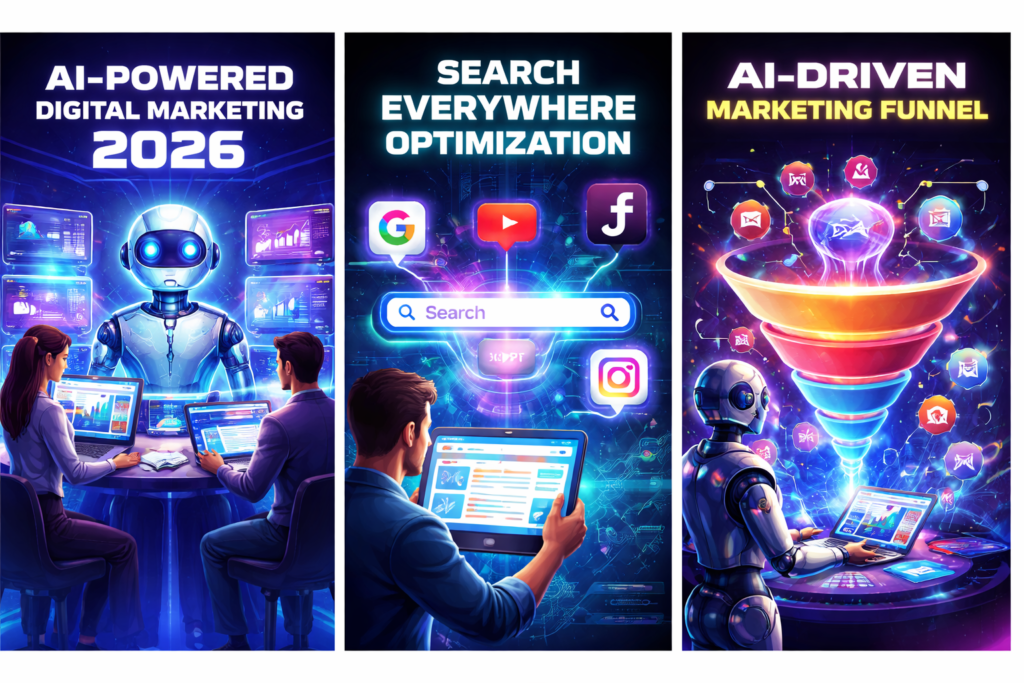
Visual Insight: The Shift to AI Marketing
The visual transformation from traditional to AI-driven marketing highlights how automation, speed, and data intelligence are reshaping the entire ecosystem.
Quality Over Quantity: The New Content Rule
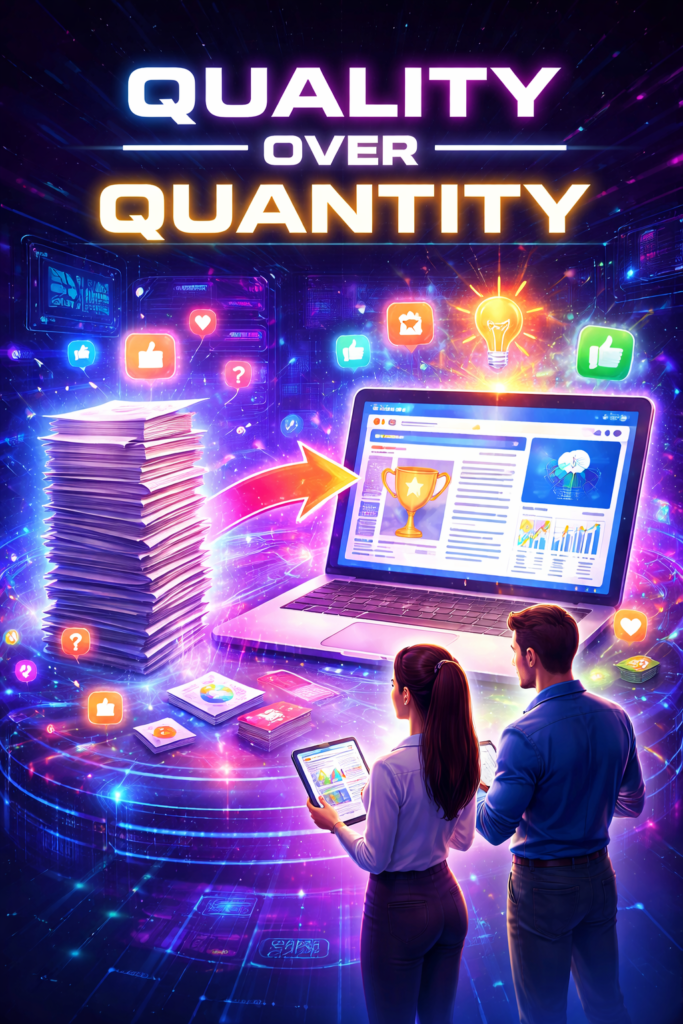
The era of mass-producing low-quality content is over. AI systems and users now prioritize authenticity, depth, and expertise. A single high-quality article can outperform dozens of average posts across platforms.
Businesses that focus on creating valuable, well-researched, and insightful content are achieving better engagement, higher rankings, and stronger brand authority.
The Future of Paid Advertising
Paid advertising is becoming increasingly AI-driven, with platforms automatically optimizing targeting, creatives, and budgets. This allows businesses to achieve better results with less manual effort.
AI-powered campaigns continuously learn and improve, delivering higher returns on investment and enabling faster scaling. Marketers now focus more on strategy while AI handles execution.
Conclusion: The Businesses That Adapt Will Win
The digital marketing trends of 2026 clearly show a shift toward automation, intelligence, and data-driven decision-making. Businesses that embrace AI, optimize their presence across all platforms, and focus on high-quality content will gain a significant competitive advantage.
Those that delay adoption risk falling behind in an increasingly competitive and fast-moving digital environment. The opportunity is not in working harder but in leveraging smarter systems that amplify results.
Ready to Grow Your Business in 2026?
If you want to implement these advanced strategies and generate consistent leads and sales, now is the time to act. Businesses across Multan, Lahore, Karachi, and beyond are already leveraging AI-driven marketing systems to scale faster and more efficiently.
📱 WhatsApp: +92 306 3343939
🌐 corelimin.com/get-instant-access